The Stuffed Owl Has to Go: A November Toy Clear-Out That Pays for Christmas
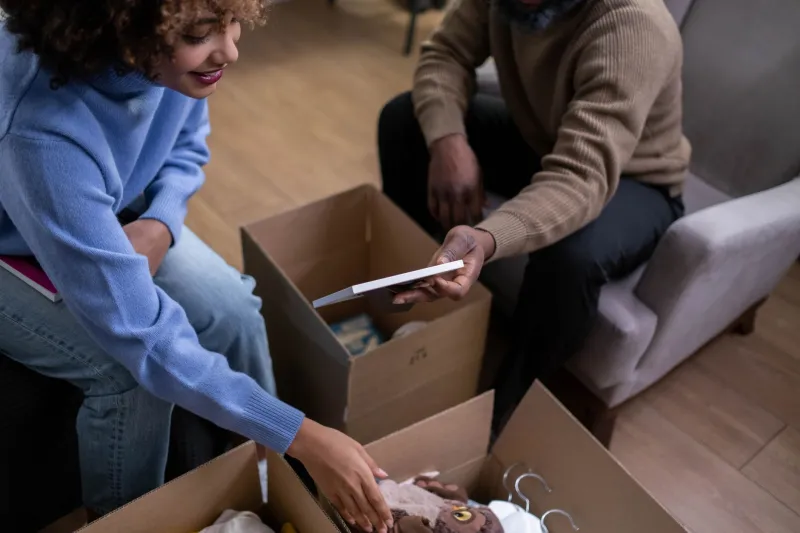
It is 9 November 2026, which means two things in our house: the first Christmas advert has already been sighed at, and the kids' bedrooms have quietly become a fire hazard made of plastic. So we do the November shakeout. Not a tidy-up. A proper toy cull with a cash target.
The idea is simple. Anything that has not been played with since the summer goes into the hallway. Then we decide, together, what it might be worth, what it actually sells for, and where the money goes. It is decluttering with a spreadsheet brain and a Christmas pot at the end.
Start with the honest question
The first pass is not about price. It is about truth. Each child picks up an item and answers one question: would I pay £5 for this if I saw it in a shop today?
If the answer is a very fast yes, it stays. If the answer is a long pause and a story about the time Grandma bought it, it probably goes. If the answer is 'what is it?', it definitely goes.
We use three boxes: sell, donate, and recycle. The donate box goes to the school Christmas fair raffle or a local charity shop, depending on condition. The recycle box is for broken bits, missing pieces and the mysterious single shoes that toys seem to breed. The sell box is where the money lesson lives.
Let the kids do the pricing (within reason)
My nine-year-old believes a used plastic dinosaur is worth £12 because it is 'rare'. It is not rare. It is sticky. So we look at sold listings together on Vinted and eBay, not asking prices. That is the first real lesson: what someone hopes to get is not the same as what someone pays.
We set a simple rule. Anything under £3 goes into a bundle or the donate box. It is not worth the photos, messages and post office queue. Anything between £3 and £10 gets listed as a single item if it is in good nick. Anything over £10 gets cleaned properly, photographed on a plain background and priced a little below the cheapest similar sold item.
The kids write the descriptions. This is chaotic but useful. My eleven-year-old learned that 'brilliant condition' means nothing if there is a photo of a chewed corner. We now use phrases like 'played with but complete' and 'small scuff on the base, see photo three'. Honesty sells faster than hype.
The apps, the fête and the awkward bits
Most of our selling happens on Vinted and Facebook Marketplace, with a few bits on eBay if they are likely to post easily. The school Christmas fair takes the bigger, heavier items — the doll's house, the ride-on thing that has been lurking in the shed. We price those to sell, not to fund a holiday.
Then comes the bit nobody warns you about: fees and postage. A £10 sale on Vinted is not £10 in your pocket. There may be a buyer protection fee, and postage can eat into the rest if you have guessed the weight wrong. On eBay, final value fees and promoted listings can shrink a small sale to a rounding error. We now add a buffer to postage and weigh things on the kitchen scales before listing.
Our realistic haul last November was £86 in listed sales. After fees, postage and one refund for a jigsaw with a missing piece, we banked £61. That is not a fortune. But it is a Christmas fund, and it came from stuff that was already in the house.
Split the money before it vanishes
This is the important bit. If the cash sits in a wallet, it becomes slushies and impulse Pokémon cards. So we split it at the kitchen table, the same day.
Our household rule is 50% to the child's savings, 30% to the family Christmas present pot, and 20% to spend now. The kids argue about the 20%. They always do. But they also see the savings balance go up, and they see the present pot pay for something real, like the tree or a board game we all play.
For younger children, a clear jar works better than an app. For teenagers, a bank transfer with a screenshot is more satisfying. The principle is the same: selling something is not just getting rid of clutter. It is converting an old thing into a choice about the future.
The worksheet that keeps everyone honest
We use a simple sheet on the fridge. It stops the 'that was mine' arguments and gives the kids a running total.
| Item | Listed price | Sold price | Fees/postage | Net | Savings 50% | Christmas pot 30% | Spend 20% |
|---|---|---|---|---|---|---|---|
| Doll's house | £25 | £20 | £3 | £17 | £8.50 | £5.10 | £3.40 |
| Bundle of board games | £12 | £10 | £2 | £8 | £4 | £2.40 | £1.60 |
| Stuffed owl | £4 | £3 | £0 | £3 | £1.50 | £0.90 | £0.60 |
At the bottom, we write the date, the total net and a very important line: 'What did we learn?' Last year's answer from my youngest was 'people do not want my broken helicopter'. Fair.
What a realistic haul looks like
Do not expect a November clear-out to pay for Christmas. It will not. Expect a small, useful pot and a bedroom floor you can see. Expect some items to sit unsold for a week, then sell in a panic on a Sunday night. Expect at least one buyer to ask if you will post a three-foot doll's house for £2.50.
But the money lesson is real. The kids learn that stuff has value, that value is not the same as price, and that selling takes effort. They also learn that a bit of cash in November can make December feel a lot less tight — not because it is huge, but because it was planned.
So the stuffed owl has gone. The doll's house is pending collection. And the Christmas pot has £18.70 in it before we have even bought a mince pie. Not bad for a Sunday afternoon with a bin bag and a blunt pencil.