The Sunday Money Huddle: Six Questions, One Kettle, Twenty Minutes
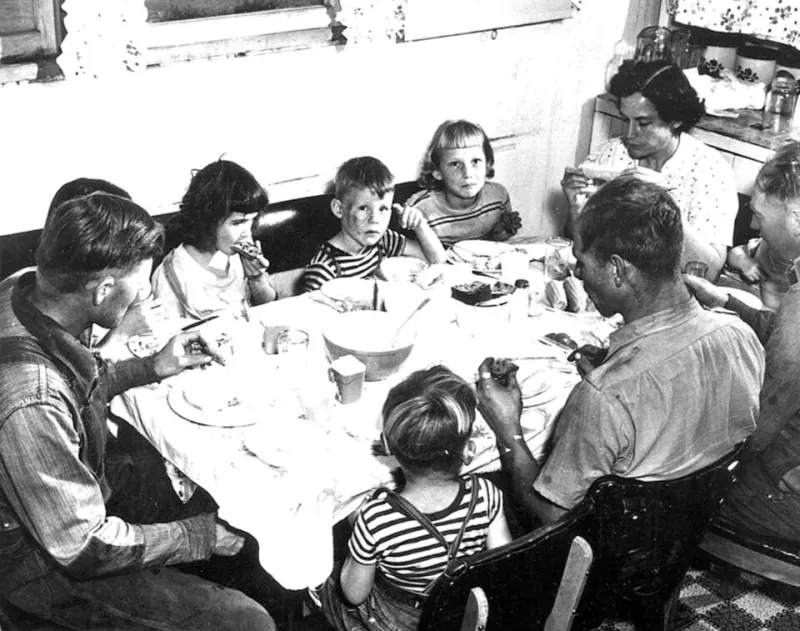
Photo: Galt Museum & Archives on The Commons, No restrictions, via Wikimedia Commons
Family money admin has a habit of happening in a panic. A school trip letter appears, someone needs £4 for a non-uniform day, the car insurance renews and the boiler makes a noise. None of it is a crisis on its own. Together, it feels like a monthly ambush.
The Sunday Six is a small antidote: six questions, twenty minutes, once a week. It's not a budget review, a spreadsheet session or a lecture. It's a short family meeting that catches the small stuff before it becomes a surprise.
Why Sunday, and why twenty minutes
Sunday works because it sits between the week that's gone and the week ahead. It can be after breakfast or before dinner, but it needs a fixed slot. Put it in the calendar and treat it like a swimming lesson: short, recurring and non-negotiable.
Twenty minutes is the whole point. A meeting that runs for an hour becomes a job. A meeting that runs for twenty minutes becomes a habit. Set a timer on your phone. If you haven't finished, park the rest for next week. Most weeks, you won't need the full twenty.
The six questions
Keep them the same every week. Repetition is what makes it quick.
- What's coming up this week that costs money? School trips, birthdays, club fees, fuel, a haircut. Put it on the calendar and note the amount.
- What did we spend last week that we didn't plan for? Not to assign blame — to spot patterns. Was it a takeaway, a parking fine, a last-minute gift?
- How's the pocket money going? Has it been paid? Has it been spent? Is anyone saving for something specific?
- What are we saving for, and did we move anything across? Check the savings pot, even if the answer is 'nothing this week'. Seeing the number is the point.
- What's one small leak we can fix? A subscription nobody uses, a daily coffee, a standing order for a gym you've stopped attending.
- Who's doing what next week? One or two actions, max. Who's checking the school app? Who's buying the birthday present? Who's chasing the refund?
That's it. No deep dive unless something needs one, in which case put it on the list for a separate conversation.
Give everyone a job
A money meeting that only involves adults is a missed opportunity. Children learn by watching and doing, not by being told. Give each person a role that fits their age.
Under 5s: choose a snack for the meeting, count coins into a jar, press the timer. That's enough. They're learning that money is something the family talks about.
5 to 8s: check the calendar for birthdays and school events, count their pocket money, decide whether to spend or save this week.
9 to 12s: read out the upcoming costs, update a simple savings tracker, help compare two prices at the supermarket.
Teenagers: check subscriptions on their phone, look at a bill with you, lead the meeting once a month. Give them the agenda and let them ask the questions. It's amazing what they notice.
Adults: one person runs the agenda, one person writes down actions. Swap roles so it doesn't become one person's job.
Keep a running list, not a spreadsheet
You don't need software. A notebook by the kettle or a note on your phone is fine. Use three columns: upcoming, leaks, actions. Look at last week's actions first — that's the accountability bit, and it takes thirty seconds.
If you like a spreadsheet, use one. But don't let the tool become the barrier. The best system is the one you'll actually open on a Sunday.
The printable agenda
Copy this into a note, print it, or write it on the back of an envelope.
- Kettle on. Timer set for 20 minutes.
- Last week's actions: done, not done, or dropped?
- Q1: What's coming up this week that costs money?
- Q2: What did we spend last week that we didn't plan for?
- Q3: How's the pocket money going?
- Q4: What are we saving for, and did we move anything across?
- Q5: What's one small leak we can fix?
- Q6: Who's doing what next week?
- Pay any pocket money due.
- Choose one action each. Write them down.
- Set the next meeting.
That's the whole thing. It fits on a postcard.
How to stop it becoming a row
Money conversations can go sideways fast, especially if one person feels judged. A few rules help.
Talk about the money, not the person. 'The food shop was £20 over' is a fact. 'You always overspend' is an accusation. Park anything that gets heated. Say: 'Let's look at that properly next week.' Most things can wait seven days.
Keep decisions small. 'We'll switch the broadband when the contract ends' is a decision. 'We'll overhaul the entire family budget' is a project. Projects belong outside the twenty minutes.
What children actually learn
They learn that money is finite, that planning is normal, and that mistakes are fixable. They see you check the calendar before saying yes to a trip. They hear you say 'we're saving for that' instead of 'we can't afford it'. They learn that a subscription is a small leak, not a mystery.
They also learn that they have a voice. A child who has counted their own pocket money into a jar and decided to save for a Lego set is learning more than any worksheet can teach.
When it goes wrong
You will miss weeks. Someone will be ill, or out, or simply not in the mood. Don't turn it into a failure. The habit is the point, not a perfect record. Pick it up the following Sunday and carry on.
You'll also have weeks where the meeting is boring. Good. Boring means nothing is on fire.
A sample twenty minutes
0–2 minutes: kettle on, last week's actions.
2–8 minutes: the six questions, quick-fire.
8–15 minutes: decide one or two actions each. Write them down.
15–18 minutes: pay pocket money, check the savings pot.
18–20 minutes: set the next meeting, timer off.
Twenty minutes buys a calmer week. That's a decent trade.