The £30 Saturday: What Happened When the Kids Planned Our Day Out
Photo: Abraham Cooper, Public domain, via Wikimedia Commons
The first plan involved a trampoline park, doughnuts and a taxi. It came to £54. The children had been in charge of the family day-out budget for eleven minutes.
This was the Borrowed Budget experiment: give the kids £30 and let them plan a Saturday for four people, covering transport, snacks and one activity. The money was ours, but the decisions were theirs. Any overspend would come out of their own pocket money. Any underspend went back into the family pot, not into their pockets, to stop the whole thing becoming an exercise in heroic cheapness.
The aim was not to save money. It was to let them feel the squeeze of a fixed budget and the very specific pain of choosing one fun thing over another.
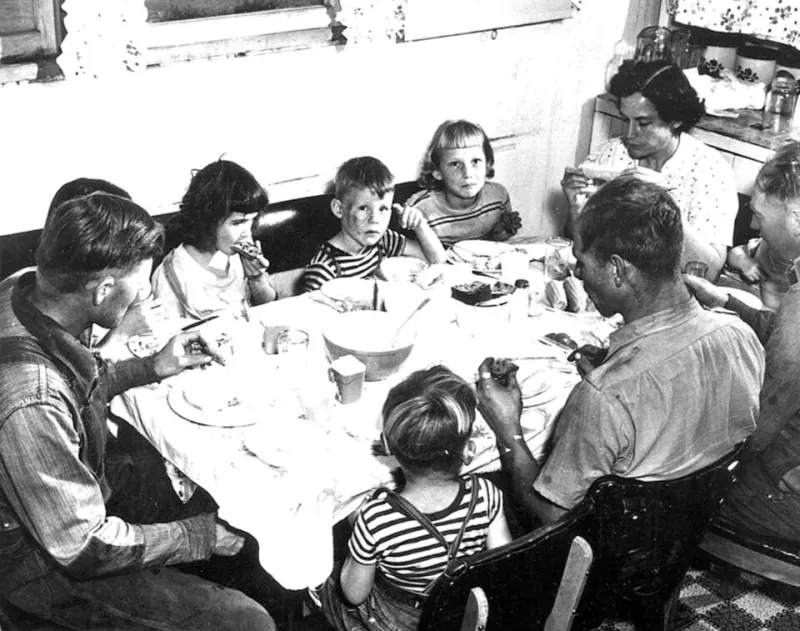
The brief, delivered at the kitchen table
We kept the rules short enough to fit on one side of A5:
- The budget is £30 for the whole family, not per person.
- It must cover transport, snacks and at least one activity.
- You can use free activities, but you must check opening times and travel costs.
- No booking anything non-refundable without an adult.
- Any overspend comes out of your pocket money.
- The day must be safe, weather-proof enough and not involve a four-mile walk in the dark.
They took it seriously. There was a calculator, a phone for checking bus times and a brief argument about whether a picnic counted as a snack or a meal. We stayed out of it as much as we could. This is harder than it sounds. Every parent has a deep instinct to say, 'But the museum cafe is quite reasonable.'
What the £30 actually bought
After two drafts, they landed on a plan: a family bus ticket into town, a free local museum, a picnic from the supermarket and a walk round the park. The activity was free. The transport was not. The snacks were not. The so-called free day out still cost money.
They came in at £28.40, with £1.60 left over. They were delighted. I was quietly impressed that they had resisted the trampoline park, although the doughnuts were cut with visible regret.
The museum was free, but the bus fare was £8.50 for the family. The picnic came to £11.90, including a bag of apples that nobody ate. The rest went on a packet of biscuits and two cartons of juice. The £1.60 leftover bought a coffee for the adult who had forgotten to bring one.
That £1.60 mattered. It showed them that a budget is not just a ceiling. It is a living thing that moves as the day goes on.
The trade-offs you cannot fake
The trampoline park had been the dream. But at £12 per child plus socks, it swallowed most of the budget before transport and food. They tried to make it work by cutting the picnic and walking. Then they discovered the walk was fifty minutes each way and the weather forecast was grim.
This was the useful bit. They were not learning about budgeting from a worksheet. They were learning that choosing one thing means not choosing another. The trampoline park was not 'too expensive' in some abstract sense. It was too expensive for this particular Saturday, with this particular family, once transport and snacks were counted.
They also learned that 'free' activities are rarely free. The museum had no entry fee, but getting there cost money. The park was free, but the biscuits were not. A day out is a bundle of small costs, and the small costs are often the ones that bust the budget.
Safety rails, not straitjackets
Giving children control does not mean abandoning common sense. We had a few non-negotiables.
First, an adult held the payment card. The children did the maths and made the choices, but we tapped the card. That avoided lost cash, dodgy cash machines and the temptation to buy something enormous because the card felt imaginary.
Second, they had to check opening times before committing. This sounds obvious until you have stood outside a closed museum on a wet Saturday with two children who planned the whole day around it.
Third, we agreed a weather backup. If the park was a washout, they had to have a Plan B that did not involve spending another £20.
Fourth, we kept the day local. No trains to the coast, no surprise theme parks. The point was to work within a small budget, not to test the limits of parental patience.
Finally, we agreed that any impulse buy during the day would come out of their own money. They could buy it, but it was theirs to fund. That stopped the day degenerating into a series of small yeses.
The debrief: ten minutes, no lectures
On the way home, we did a short debrief. It was not a formal review. It was just a chat in the car, but it was the most useful part of the whole experiment.
We asked:
- What was the best bit per pound?
- What did you cut, and why?
- What surprised you about the cost?
- Did anything feel like a rip-off?
- What would you do differently next time?
- What should we keep for next time?
The answers were revealing. The best bit per pound was the museum, because it was free and warm. The biggest surprise was the bus fare. The rip-off was the juice cartons, which cost more than the apples and were gone in minutes. Next time, they said, they would bring squash from home and buy fewer biscuits.
Try to resist the urge to say, 'I told you so.' The point is to let them reach the conclusion themselves. A child who says 'the bus fare was more than I expected' has learned more than a child who is told 'public transport is expensive'.
What changed at home
The experiment did not turn our children into miniature accountants. It did make them noticeably more aware of what things cost. A few days later, one of them asked how much it cost to run the car. Another started comparing the price of a cinema trip with a free film at home. Small stuff, but real.
The £30 experiment also changed how we plan family days out. We now ask them to price up an idea before we agree to it. Not every time, and not as a punishment. Just as a habit. It is amazing how quickly 'can we go to the soft play?' becomes 'can we go to the soft play if we skip the cafe and take a flask?'
That is the real lesson of the borrowed budget. A day out is a series of choices, and even children can learn to make them. Give them a number, a few safety rails and a ten-minute debrief, and they will start to see the price behind the fun.